






Perplexity Launches AI-Powered Web Browser Comet: A Smart Challenger to Google Chrome
The browser war is heating up again, but this time, it’s no longer just about speed or design. It’s about intelligence. In a bold move that could shake up the way we explore the internet, Perplexity, an emerging AI-powered search company backed by Nvidia, has officially launched its own web browser called Comet. Unlike traditional browsers like Google Chrome, Mozilla Firefox, or Microsoft Edge, Comet is designed to be your thought partner, not just a window to the web.
With OpenAI also reportedly working on its own AI-driven browser, the message is loud and clear — the age of AI browsers has begun, and Perplexity is wasting no time in taking the lead.
What is Comet? The AI Browser That Thinks With You
According to Perplexity CEO Aravind Srinivas, Comet is not “just another browser.” He explains that it’s been built with the idea of augmenting human thought, making browsing more like a collaborative dialogue between user and machine.
So what makes Comet different from Chrome, Edge, or Safari?
“The browser shouldn’t just be a passive window to the internet. It should be an active partner in helping users think, discover, and learn,” says Aravind Srinivas.
This fresh concept of treating a browser like a “thought partner” is central to Comet’s design. Whether you’re researching a new topic, comparing reviews, or even planning your holiday, Comet attempts to understand your intent and then serve curated, conversational, and context-rich responses — almost like an AI co-pilot sitting beside you.

Comet vs Google Chrome: What’s Different?
Search That’s Actually Smart
Instead of throwing 10 blue links at you like Google Search does, Comet combines natural language understanding, large language models (LLMs), and real-time web data to answer your questions directly, complete with citations.
No need to click five links, scroll endlessly, or deal with SEO-heavy clutter. You ask — Comet explains.
Built-in Q&A Sidebar
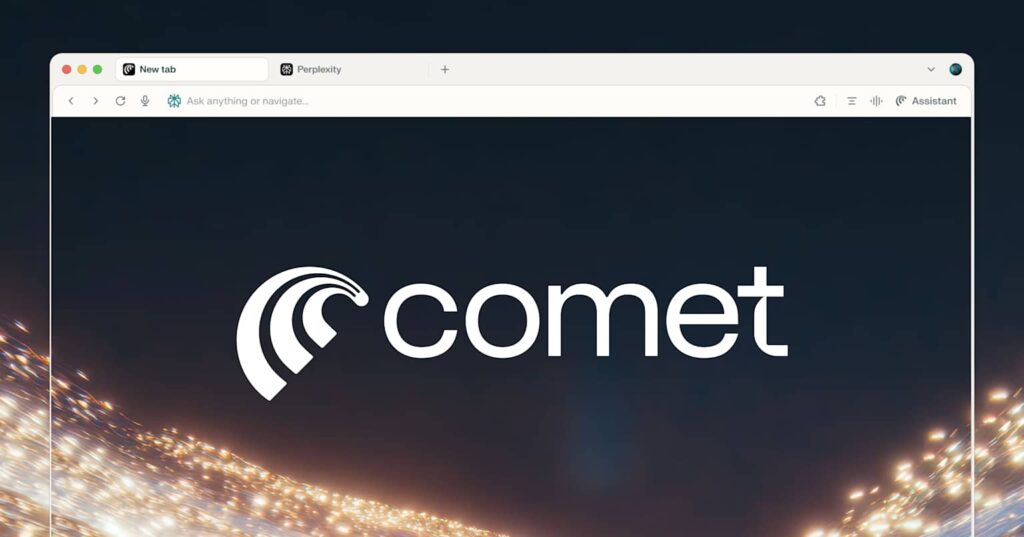
Comet includes a smart sidebar that acts like a real-time AI research assistant. You can highlight any text and ask the browser to explain, summarize, or compare it with other sources. Imagine doing your college project or market research with that kind of help!
Persistent Memory
While traditional browsers store your history, Comet remembers your context and intent. So if you ask something today and follow up tomorrow, Comet can continue the conversation, just like a human friend would.
Privacy by Default
Interestingly, Perplexity claims that Comet does not track users across the web. In contrast to Chrome — which is often criticized for harvesting user data for ads — Comet is built privacy-first, respecting your curiosity without snooping.
Nvidia-Backed Vision: Why Perplexity Matters Now
Perplexity has grown fast in the AI search space, often dubbed the “ChatGPT of Search.” With Nvidia backing its vision, the company now has the muscle and momentum to take on Silicon Valley’s biggest names. This isn’t a browser project born in a garage — it’s a deliberate, well-funded push to reimagine how we browse the internet.
The Perplexity AI engine that powers Comet is built on top of multiple LLMs — including some proprietary ones, and others like OpenAI’s GPT or Anthropic’s Claude — to provide better accuracy and responsiveness. And that makes Comet not only fast, but also contextually smart.
OpenAI Is Working On Its Own AI Browser Too
As if one competitor wasn’t enough for Google, reports suggest that OpenAI is also developing its own web browser, which may have agentic capabilities — meaning it could perform tasks on your behalf, such as booking flights, comparing insurance plans, or summarizing PDFs.
If OpenAI launches this browser soon, it could directly compete with both Chrome and Perplexity’s Comet. This also indicates that Google’s dominance in web browsing is under serious threat, especially with ChatGPT already replacing Google Search for many users.
Browsers Are Evolving: From Tools to Partners
Let’s face it — most browsers have looked and behaved the same for years. Chrome is fast, but it hasn’t fundamentally changed how we interact with information. The tabs are still tabs. Bookmarks are still bookmarks. And search is still mostly typing in and clicking around.
Comet breaks this mold by treating your intent — not just your input — as the starting point. It wants to help you think better, not just browse faster.
Here’s a simple example:
- On Chrome: You search “Best smartphones under ₹30,000 in India 2025,” and get flooded with listicles, ads, and affiliate links.
- On Comet: It reads real-time comparisons, recent user reviews, expert insights — and gives you a clear, citation-backed summary, in one go.
That’s not just convenient — that’s revolutionary.
Who Can Use Comet? How To Try It
At the time of writing, Comet is available via invite-only access, and limited to desktops. The company is planning a mobile rollout later this year.
You can join the waitlist on Perplexity.ai, and if accepted, you’ll get to test one of the first AI-native browsers in the world.
What Does This Mean for Google?
Google may still dominate browser market share with Chrome, but with AI becoming the center of everything, it faces serious competition now. People want not just speed and sync, but smarts and support.
With OpenAI and Perplexity both aiming to replace Google Chrome with their AI browsers, users may slowly start migrating — especially those who value deep learning, productivity, and time-saving tools.
And if Google doesn’t adapt quickly, we could see the same fate that Internet Explorer met years ago.
The Rise of Browser as AI Workspace
One interesting trend that Comet hints at is this: The browser is no longer just an app — it’s becoming your personal AI workspace. You can research, brainstorm, write, edit, ask questions, and even delegate tasks — all within one smart environment.
This could have profound effects on:
- Students, doing projects or learning new subjects.
- Writers, looking for idea generation or research help.
- Entrepreneurs, exploring new trends or competitors.
- Everyday users, planning trips, making purchases, or organizing life.
Comet isn’t trying to be Chrome with a chatbot. It’s trying to change the idea of what a browser can be.
AI Browsers Are the Future
The launch of Comet shows us one thing loud and clear — AI is going to be deeply embedded in our everyday web experiences. The old way of browsing is slowly becoming outdated. We don’t just want pages; we want answers. We don’t just want history; we want memory. We don’t just want speed; we want meaning.
And that’s exactly what Perplexity is trying to give us.
If OpenAI launches its own AI browser soon, things will get even more exciting. But for now, Comet has fired the first shot, and it’s aiming straight at the heart of Chrome.