







Google Beam: Our AI-First 3D Video Communication Platform Is Here
Google has always been ahead in the tech race, and now they’ve done it again with something very futuristic. At Google I/O 2025, they introduced a new product called Google Beam: Our AI-first 3D video communication platform. It’s not just a regular video calling app. It’s a whole new way to connect with people using AI and 3D technology that feels real, like you’re sitting in the same room.
This new platform is built on an earlier Google project called Project Starline. Over the years, it has evolved a lot and now is ready to become part of our daily communication. Beam is designed to make digital interactions more human and natural — no need for headsets or AR glasses, just sit and talk.
Google Unveils Beam, a 3D Video Calling Platform That Brings Digital Interactions to Life
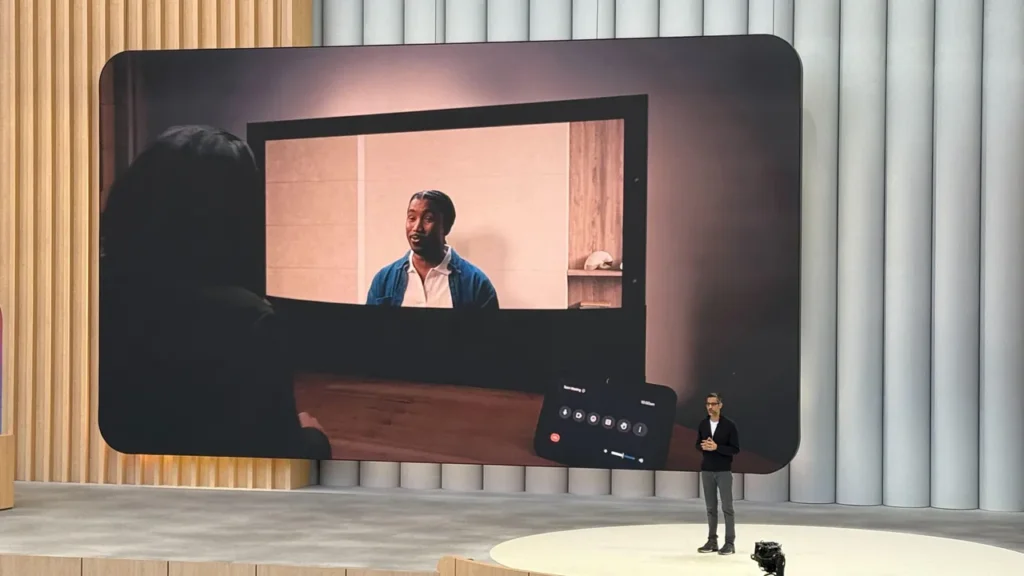
The best part about Google Beam is how it shows people in full 3D. When you talk to someone using Beam, you can see them as if they are sitting right in front of you. You can notice their facial expressions, hand movements, and even eye contact — things that regular video calls cannot capture properly.
This feeling of presence makes conversations more engaging and more emotional. According to Google, this makes virtual communication much closer to real-life face-to-face interactions.
This is especially helpful in situations like remote work meetings, doctor consultations, or online education. People can talk and connect in a more natural and meaningful way.

Google Beam Promises Futuristic AI-Powered 3D Video Chats
Beam is more than just 3D video. It uses powerful AI to understand human behavior, lighting, and expressions, and then recreate them on screen in real time. So even when someone moves their head or smiles, the other person sees that perfectly.
This system uses advanced light field display technology. You don’t need any VR goggles or 3D glasses. Just look at the screen, and it feels real. It’s smooth, clear, and life-like.
What’s even more exciting is that the hardware is now smaller and easier to use. Google has teamed up with HP to develop Beam’s hardware, so businesses and offices can use it without needing a big setup. Earlier, the technology needed a full-sized booth, but now it fits on a normal desk.
Google I/O | AI-Powered Beam, Google Meet Translation, and Project Astra Integration Introduced
At Google I/O 2025, Beam was launched along with other major AI updates. One of the biggest highlights was the announcement that Beam would work with Google Meet’s real-time translation and Project Astra.
With Google Meet translation, users can talk in their native language, and Beam will translate it instantly. But not just translate – the voice you hear will still sound like the original speaker, keeping their tone and emotion. This is done using smart voice cloning AI. It feels more natural and less robotic than traditional translations.
Also, Beam will connect with Project Astra, Google’s new AI assistant. Astra can listen, watch through the camera, and respond smartly. So imagine, during a Beam call, Astra could take notes, search information, or even help explain things in real time. It’s like having a digital assistant always ready beside you.
Key Features and Specifications of Google Beam
There are many new things in Beam that make it different from regular video calling platforms. Here are some key features explained simply
1. Realistic 3D Communication
Beam uses cameras, depth sensors, and AI to show real-looking people in 3D. You can notice small gestures and body language, which helps in better communication.
2. No Special Glasses Required
You don’t need to wear any goggles or devices. Just sit in front of the screen and talk. The screen itself uses light field display technology to make the 3D effect real.
3. Real-Time Translation
Beam supports live translations with voice cloning. So if you’re speaking in Hindi and the other person speaks English, you both hear and understand each other clearly, without needing subtitles.
4. Integration with Astra
Project Astra can join your conversation, give smart suggestions, remind you of your tasks, or answer questions in real time.
5. Built for Businesses
Beam is first being launched for offices and enterprise use. That means companies can hold better meetings with clients, partners, and remote teams.
6. Made with HP
Google has joined hands with HP to make the Beam hardware. It is designed to be compact and efficient, making it easier to install and use in real-world office spaces.
The Cultural Value of Beam in Indian Homes and Workspaces
India is a country full of languages, cultures, and emotions. From big business meetings to video calls with family in other cities or countries, communication is a part of our daily life. And sometimes, language differences or poor quality calls can create a gap.
Beam can help fill that gap. With Google Meet translation, people from different parts of India can speak in their own languages and still understand each other fully. A Tamil-speaking person can talk freely with a Bengali speaker and still have a smooth conversation.
Also, during festivals, weddings, or even school parent-teacher meetings online, Beam can make those moments feel warmer and more personal.
In remote villages where schools are getting digital classrooms, this tech can make learning more interactive and life-like. Students can feel the presence of a teacher even if they are miles away.
What’s Next for Google Beam?
Right now, Beam is launching for enterprise users, mostly companies and business clients. But Google plans to bring it to normal users too in future. Imagine using Beam at home for a video call with your cousin in Dubai or attending an online concert where you feel like you’re actually there.
There is also a possibility that Beam will work on Chromebooks and smart displays soon. As more people and businesses adopt AI-first tools, Beam will likely become a part of regular communication, just like Zoom or Google Meet today.
With Beam, Google wants to go beyond simple video calls. They want to bring emotions, eye contact, and human touch into the digital world.
Google Beam: Our AI-first 3D video communication platform is not just a tech update — it’s the future of communication. It combines Google’s AI power, 3D visuals, voice intelligence, and even language translation into one beautiful experience.
From emotional family chats to professional boardroom meetings, Beam can make every digital moment feel closer to real life. It’s smart, smooth, and feels more human.
For a country like India, where communication is deep and personal, Beam could change how we connect — across cities, across cultures, and even across languages.
So yes, the future of video calling is not far anymore. With Google Beam, it’s already here.


3 thoughts on “Google Beam: AI-First 3D Video Communication Platform”
Comments are closed.